
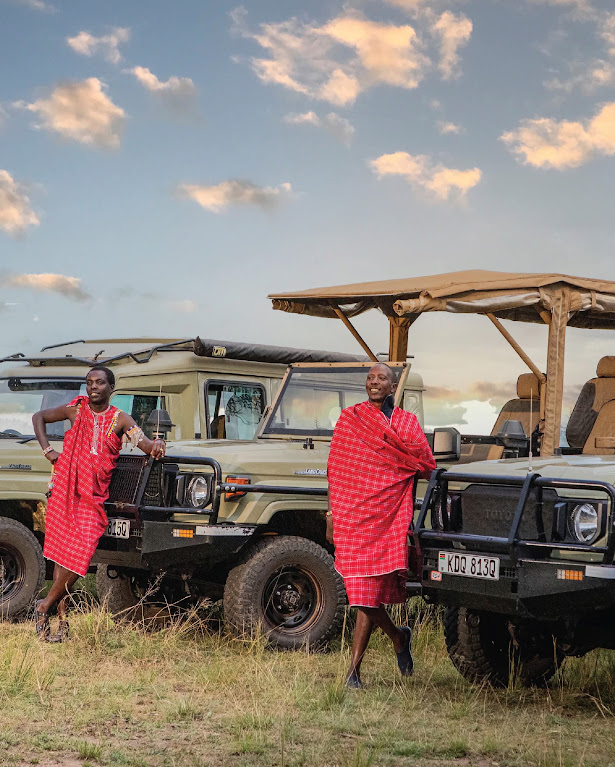
A firsthand account of a Nairobi JKIA to Maasai Mara road transfer, including the route we took, why we chose a Safari Land Cruiser, what guests experienced along the way, and what you should confirm before booking your own transfer.
There is a big difference between reading that Nairobi to Maasai Mara takes around six to seven hours and actually sitting in a safari vehicle and making the journey.
I have just completed another Nairobi–Maasai Mara road transfer, and this particular journey was a good reminder that the road to the Mara is not simply a transfer from one point to another.
The route itself is part of the experience.
We collected our guests from Jomo Kenyatta International Airport (JKIA) at approximately 7:00 AM and headed towards the Maasai Mara in a 79 Series Safari Land Cruiser, configured comfortably for up to six passengers.
The journey took approximately 6.5 hours, including scenic stops and a stop at a curio shop.
For the guests, the journey was more than simply getting from Nairobi to the Mara. They were fascinated by what they were seeing along the way and, by their reaction, the experience went beyond what they had expected.
Our Nairobi to Maasai Mara route
One of the decisions we made was to avoid getting trapped in Nairobi’s morning traffic.
Instead of simply following the most obvious route through the city, we used Nairobi’s bypass network, eventually connecting towards Waiyaki Way, then continuing towards Maai Mahiu and onwards towards the Maasai Mara.
For a morning departure from JKIA, route selection matters.
Nairobi traffic can change the character of a road transfer completely. A journey that should feel like the beginning of a safari can quickly become hours of sitting in urban congestion.
Once we were clear of the city, the character of the journey changed.
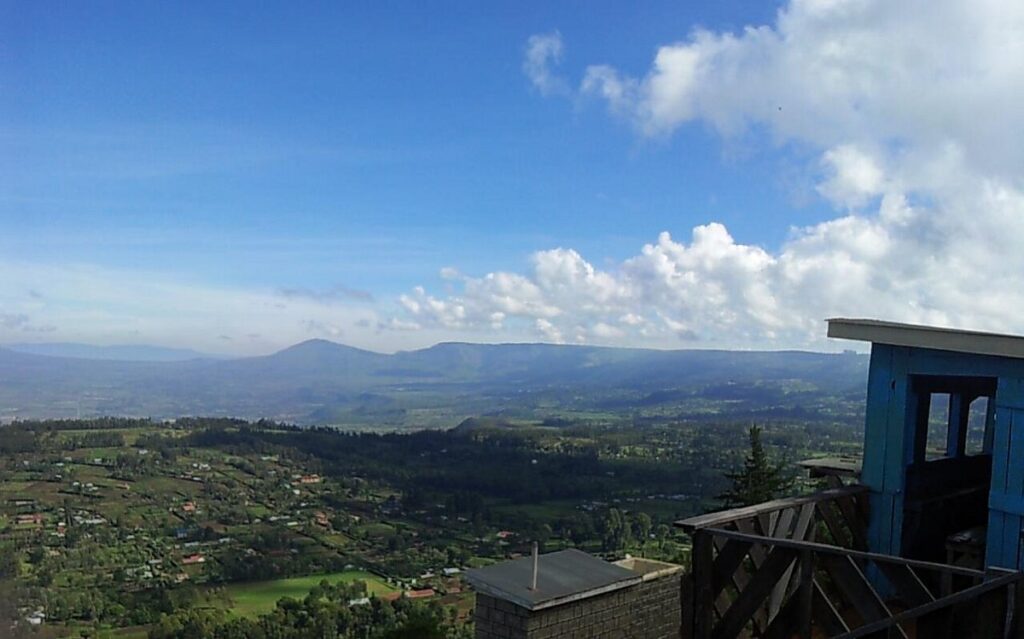
The landscape gradually opened up as we approached the Rift Valley.
The Rift Valley: one of the highlights of the drive
For me, driving down into the Rift Valley is one of the most interesting parts of this route.
It is also challenging.
There are long stretches with retailers, commercial traffic and semi-trucks, and the driver needs to remain attentive throughout this section of the journey.
But then the scenery changes.
As you descend from the viewpoint, the landscape opens up and the views become breathtaking.
This is one of those places where I don’t think travellers should be obsessed with simply reaching the Mara as quickly as possible.
Sometimes you need to look out of the window.
The Rift Valley scenery gives visitors a completely different introduction to Kenya. You are moving away from the capital and into a landscape that feels increasingly rural, expansive and distinctly East African.
Our guests were fascinated by the scenery and enjoyed the ride considerably.
Why we used a Safari Land Cruiser
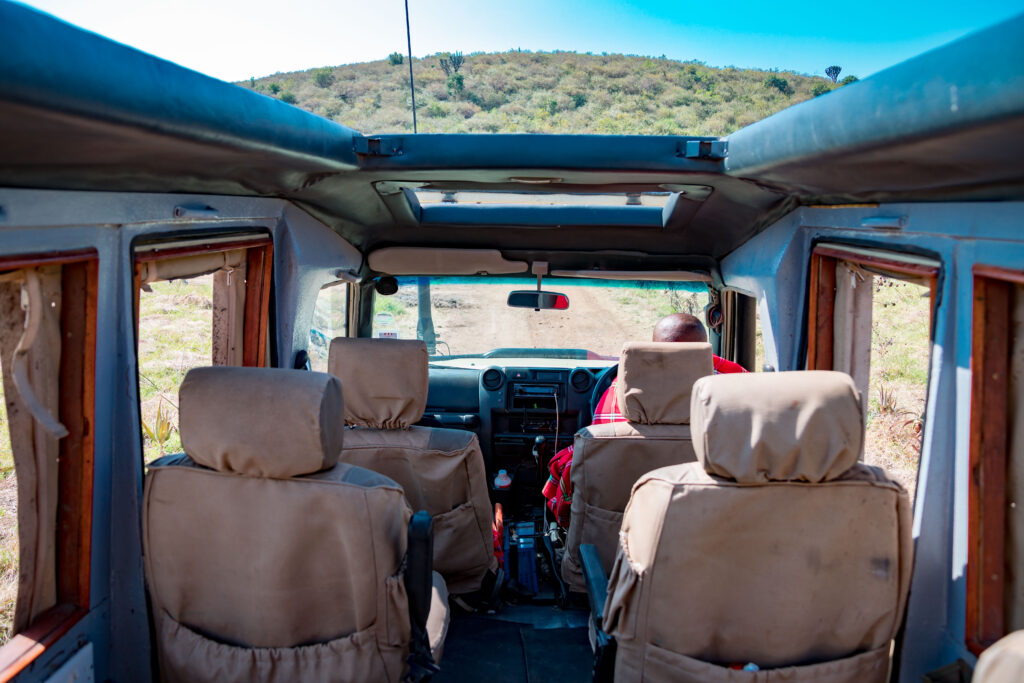
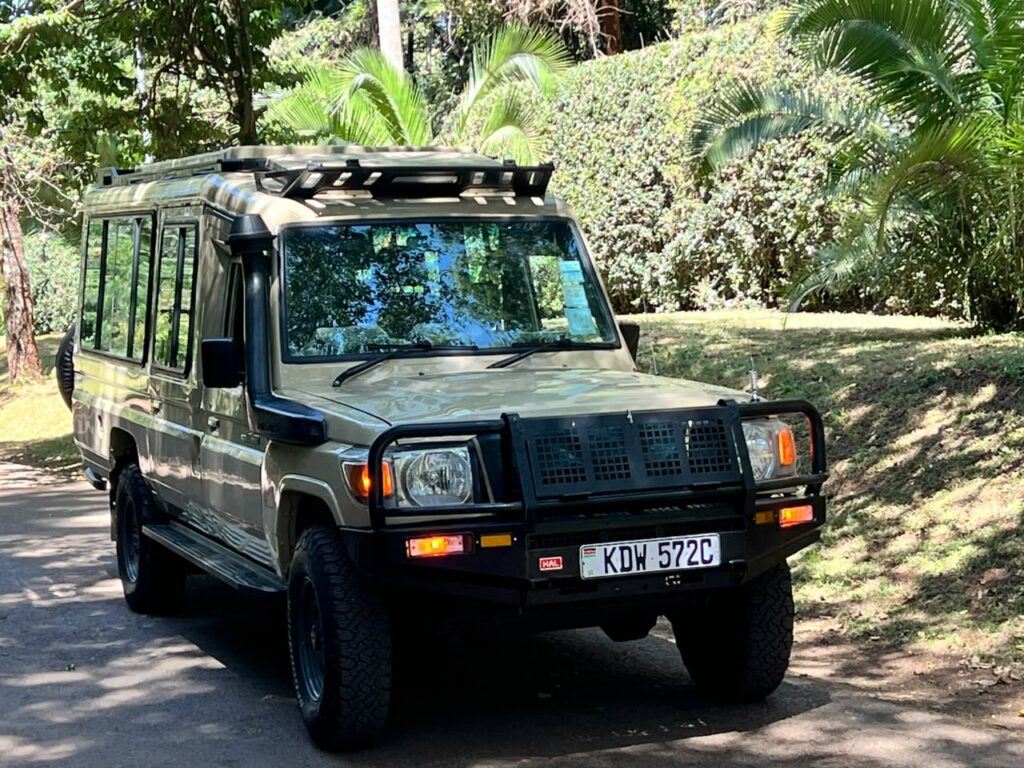
For this particular transfer, we used a 79 Series Safari Land Cruiser, suitable for six passengers in comfortable seating.
There is an important distinction here.
When someone books a Nairobi–Maasai Mara road transfer and asks for a Safari Land Cruiser, they should confirm exactly what vehicle will be provided.
A Safari Land Cruiser is not simply a normal SUV with a safari name attached to it.
Our vehicle is designed for safari conditions, including rougher terrain.
Comfortable seating for six
For a journey of approximately six and a half hours, passenger comfort matters.
We had enough space to seat six guests comfortably, with good spacing between passengers.
The vehicle provides a 360-degree viewing angle, which is particularly useful once you move into the countryside and begin seeing the changing landscapes.
The pop-up roof
The pop-up roof is another major advantage.
During our journey, we stopped so the guests could enjoy some spectacular photography.
That is one of the reasons I like travelling by safari vehicle rather than treating the Nairobi–Mara journey as an ordinary road transfer.
The journey itself can provide opportunities to stop, observe and photograph.
Of course, these stops depend on the guests.
Some travellers are focused on reaching their camp as quickly as possible. Others are constantly asking to stop because they are fascinated by the scenery.
There is no single correct approach.
The important thing is to understand what kind of experience your guests want.
What about luggage?
There is sufficient luggage space in the vehicle, but for safari travel I 100% recommend duffel bags or soft luggage.
Hard-shell suitcases can be more difficult to accommodate efficiently in safari vehicles, particularly when several passengers are travelling together.
A soft-sided bag can generally be positioned and packed much more easily.
If you are flying into Kenya and continuing directly to the Mara, this is something I would think about before you arrive at JKIA.
Charging your devices on the road
Guests also need to remain connected.
The vehicle has charging support, including 240V and 110V support, allowing travellers to keep phones and other compatible equipment powered during the journey.
This becomes particularly useful when guests are taking photographs and videos throughout the day.
And on a journey like this, they usually take plenty.
Is there air-conditioning?
Our Safari Land Cruiser is designed around safari ventilation and open-air viewing rather than relying solely on conventional air-conditioning.
With the pop-up roof and open safari configuration, guests can enjoy the surroundings rather than being completely separated from the environment.
That is part of the safari experience
What was the guest experience like?
The guests were very cooperative throughout the journey.
They did not simply sit quietly waiting to arrive at the Mara.
They were fascinated by what they were seeing and asked questions along the way about Kenya, the roads, the Mara, wildlife and safari life.
They were, in their own words and reactions, beyond their expectations.
They were particularly impressed by the scenery and the overall ride.
The Rift Valley, the photography stop and the curio-shop stop all added something to the journey.
It became clear that they had not expected the road transfer itself to be such a memorable part of their Kenyan experience
Should you stop along the Nairobi–Mara road?
There is no universal answer.
It depends on the traveller.
Some guests want the most direct possible journey. Others see something interesting every few kilometres and want to stop.
On this particular transfer, our guests enjoyed the scenery and photography opportunities.
I personally think travellers should leave some flexibility in their schedule if they want to experience the journey rather than simply measure it by arrival time.
A six-and-a-half-hour transfer should not necessarily mean six-and-a-half hours of staring at the clock.
What is included in our road transfer?
This is another area where travellers should ask questions before paying for a Nairobi–Mara transfer.
For our transfer, the package included:
- Safari Land Cruiser
- Driver
- Driver’s allowance
- Park fees
- Drinking water
- Vehicle and driving services
There were no hidden charges added to the transfer.
But I strongly recommend asking any operator to explain the inclusions clearly in writing before travelling.
The phrase “all-inclusive” can mean different things to different operators.
One question you should always ask: What vehicle am I actually getting?
This is probably one of the most important lessons I would take from years of safari operations.
If you specifically request a Safari Land Cruiser, don’t simply assume that is what will arrive.
Ask.
Confirm the vehicle type.
If necessary, have it stated on your booking confirmation.
A traveller can book what they believe is a Land Cruiser and discover later that the vehicle supplied is something different.
This matters because the vehicle affects passenger comfort, luggage arrangements, visibility and the overall safari experience.
A cheaper quote is not automatically comparing the same product.
You need to compare what is actually being supplied.
How much experience should your driver have?
The Nairobi–Maasai Mara road is not just about knowing how to steer from Nairobi to the Mara.
Experience matters.
Our driver has more than 15 years of experience, including extensive knowledge of safari routes and driving conditions.
A driver who knows the route understands that the journey is not simply a line on a map.
They need to understand traffic patterns, road conditions, terrain, safe stopping opportunities and how to manage the journey around the guests’ interests.
That experience becomes particularly valuable when conditions change.
How long should you expect the journey to take?
Our most recent journey took approximately 6.5 hours from the JKIA pickup to the Mara, including scenic and curio stops.
But travellers should be careful about treating six and a half hours as a guaranteed timetable.
Your actual journey can vary depending on:
- Nairobi traffic
- Road conditions
- Weather
- Stops requested by guests
- The final destination inside the Mara
- Vehicle and driving conditions
- Other circumstances on the road
For that reason, I would rather give a realistic travel window than promise an exact arrival time.
Nairobi–Maasai Mara by road: my advice after this latest transfer
If you are considering travelling from Nairobi to the Maasai Mara by road, my advice is simple:
Don’t look at the journey only as a transfer.
The drive introduces you to Kenya.
You leave the airport, navigate the energy of Nairobi, move towards the Rift Valley, descend through one of the country’s most dramatic landscapes and gradually enter the world of safari.
Choose your vehicle carefully.
Confirm what is included.
Ask what vehicle you are actually receiving.
Travel with soft luggage.
Choose an experienced safari driver.
And if your schedule allows it, leave room for a few moments when you can simply stop and appreciate what is outside the window.
Because sometimes the road to the safari is already part of the safari.
From JKIA to the Mara: what this journey taught me
After this particular transfer, what stood out to me was how surprised the guests were by the journey itself.
They arrived expecting transportation.
What they experienced was a gradual transition from Nairobi into the landscapes of the Great Rift Valley and eventually towards the Maasai Mara.
That is why I believe a good safari road transfer should not be treated as merely moving guests from Point A to Point B.
The vehicle, route, driver, timing and flexibility all contribute to the experience.
And when those pieces come together, the road becomes part of the story.
Planning your Nairobi–Maasai Mara road transfer?
If you are arriving at JKIA and travelling directly to the Maasai Mara, plan your departure carefully, confirm your vehicle type in advance, and discuss luggage and stops with your safari operator before travelling.
For guests who value comfort, space and safari viewing, a properly configured Safari Land Cruiser with experienced driving support can turn the Nairobi–Mara road journey into much more than a long drive.


